
EXCLUSIVE: Kent State a cappella group bans white students from solo auditions
The Kent State Vocal Intensity A Cappella group restricted certain solos strictly to 'people of color' over 'cultural appropriation' concerns.
Emails show Kent State student disciplined after opposing race-based solo policy.
An a cappella group at Kent State University in Ohio allegedly banned white students from auditioning for certain solos and disciplined a longtime member for questioning the race-based policy.
Emails obtained by Campus Reform display how Vocal Intensity A Cappella limited certain solos to “people of color,” claiming white students would be engaging in “cultural appropriation” if they were to perform them.
[RELATED: Oklahoma Supreme Court dismisses lawsuit over Bibles in classrooms]
Mark Phillips, a three-year member and the a cappella group’s beatboxer, contacted a board member to inquire about how the exclusion of white students aligned with Kent State’s anti-discrimination policies. Phillips suggested the limitation seemed “at odds with equal opportunity” in his message to the executive board.
“I fully respect concerns about authenticity, but I also believe that whoever gives the strongest performance should be given the chance,” he wrote. “Art, music, and culture are meant to be shared and celebrated, not gatekept.”
In response, the board accused him of violating the university’s anti-discrimination policy, placed him on probation, and scheduled a disciplinary hearing requiring him to “plead his case” before the entire group.
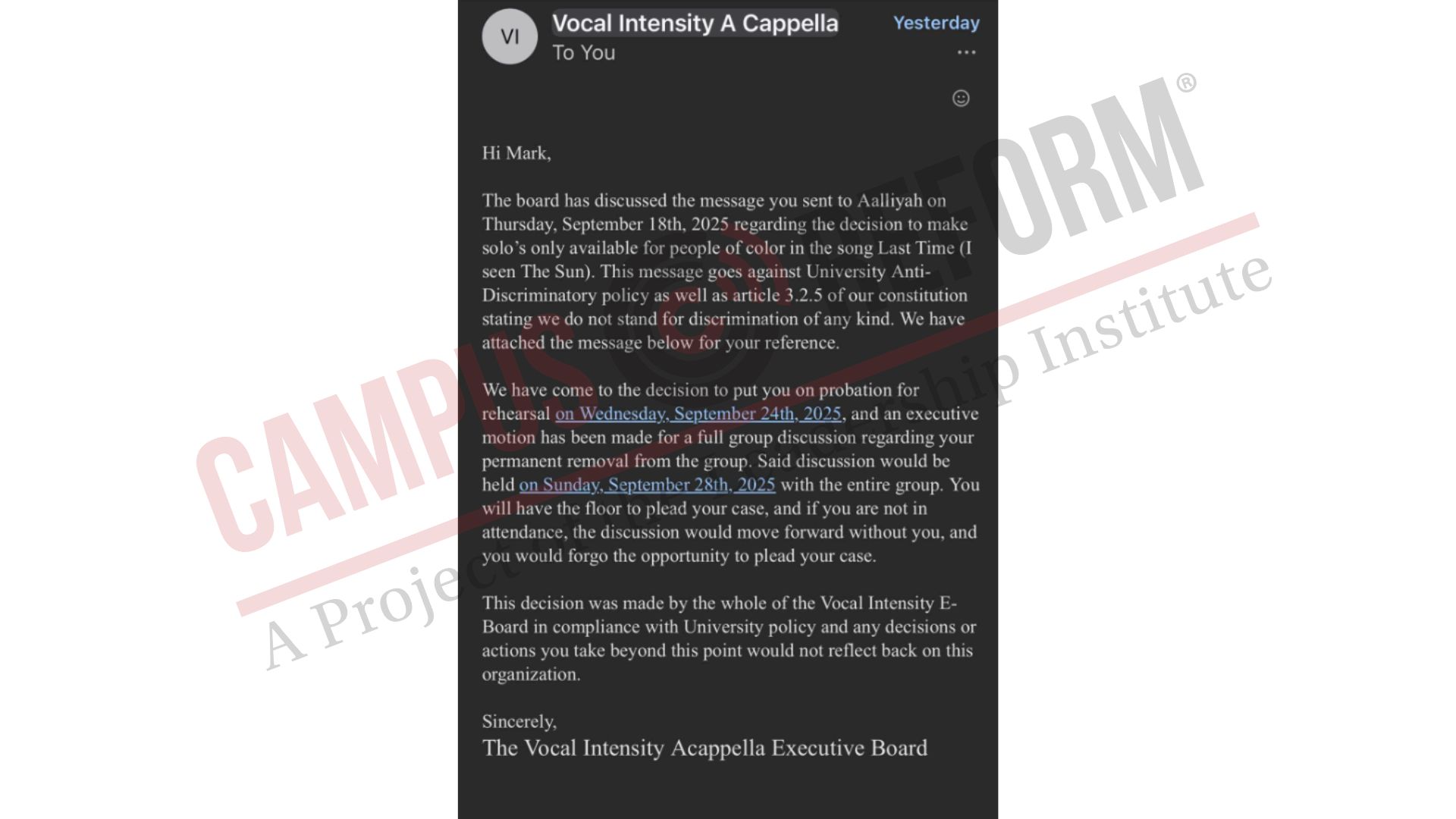
The board later reaffirmed its position, confirming that the solos would remain restricted to black students unless overturned by a vote.
According to the group’s constitution, discrimination is prohibited on the basis of race, and Kent State University’s policy also bans racial discrimination and specifically retaliation against students who challenge it.
While university guidelines prohibit discrimination, the board prepared a process that included a closed board hearing, potential permanent removal, and even a potential several months-long suspension.
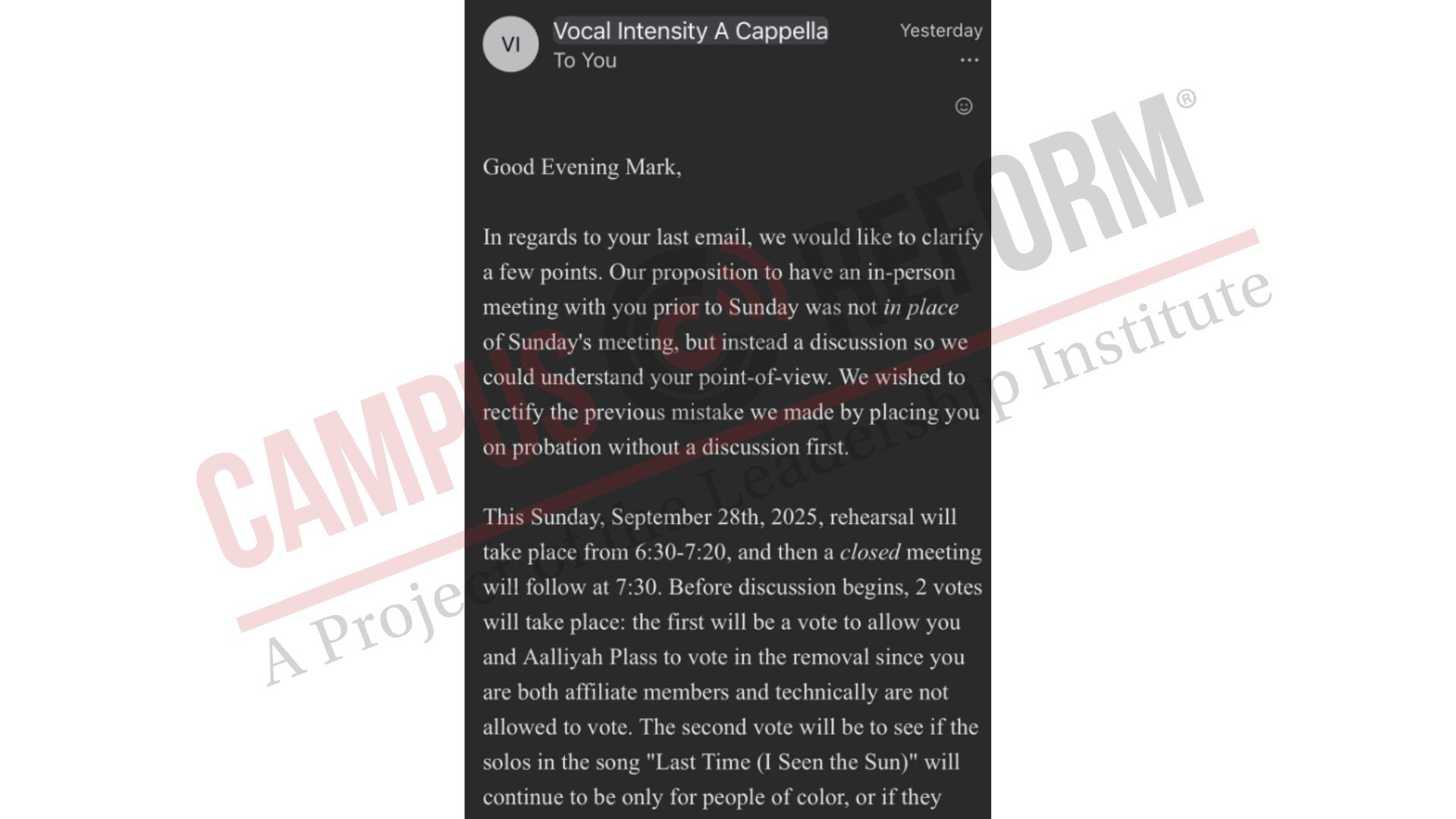
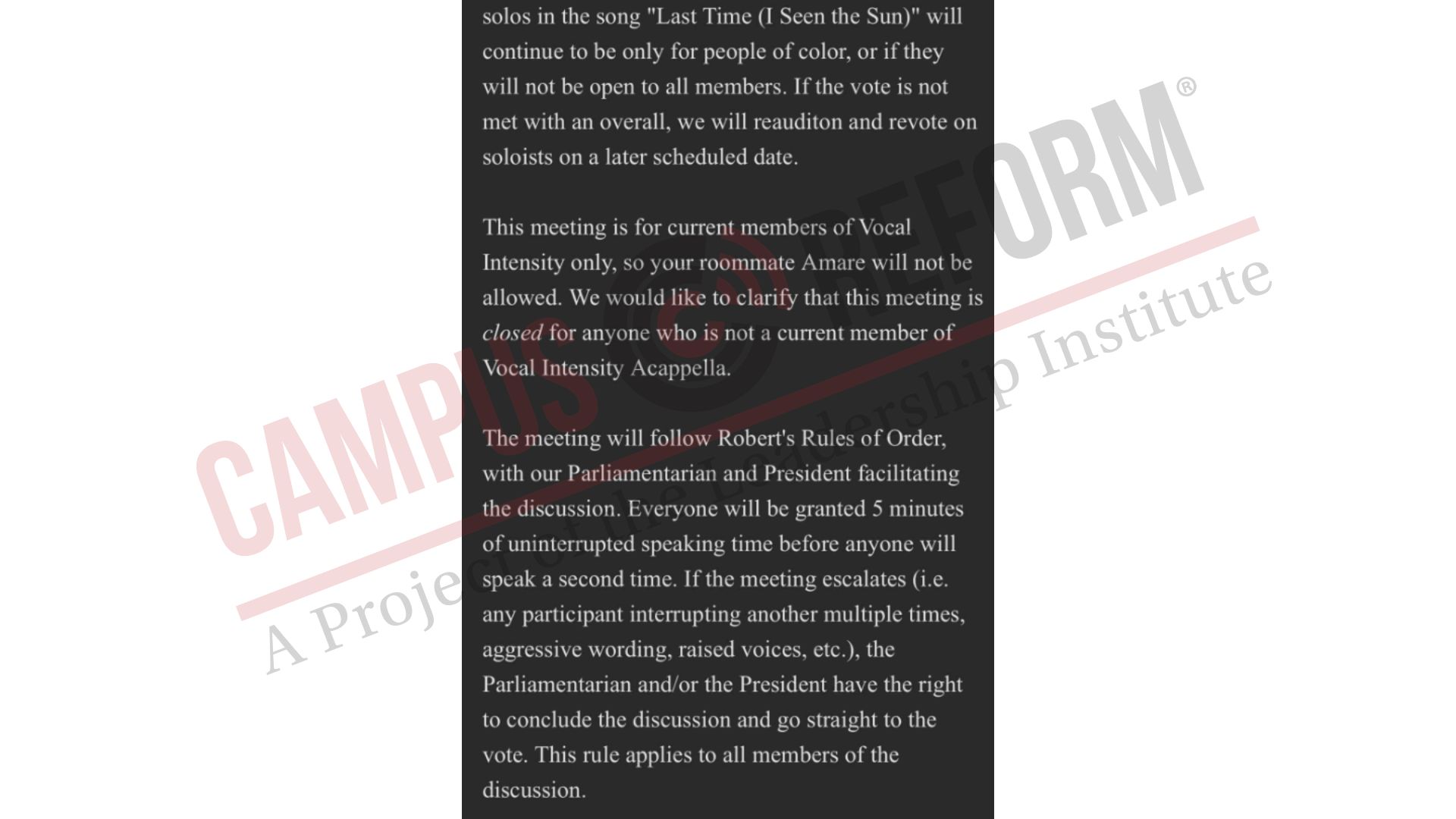
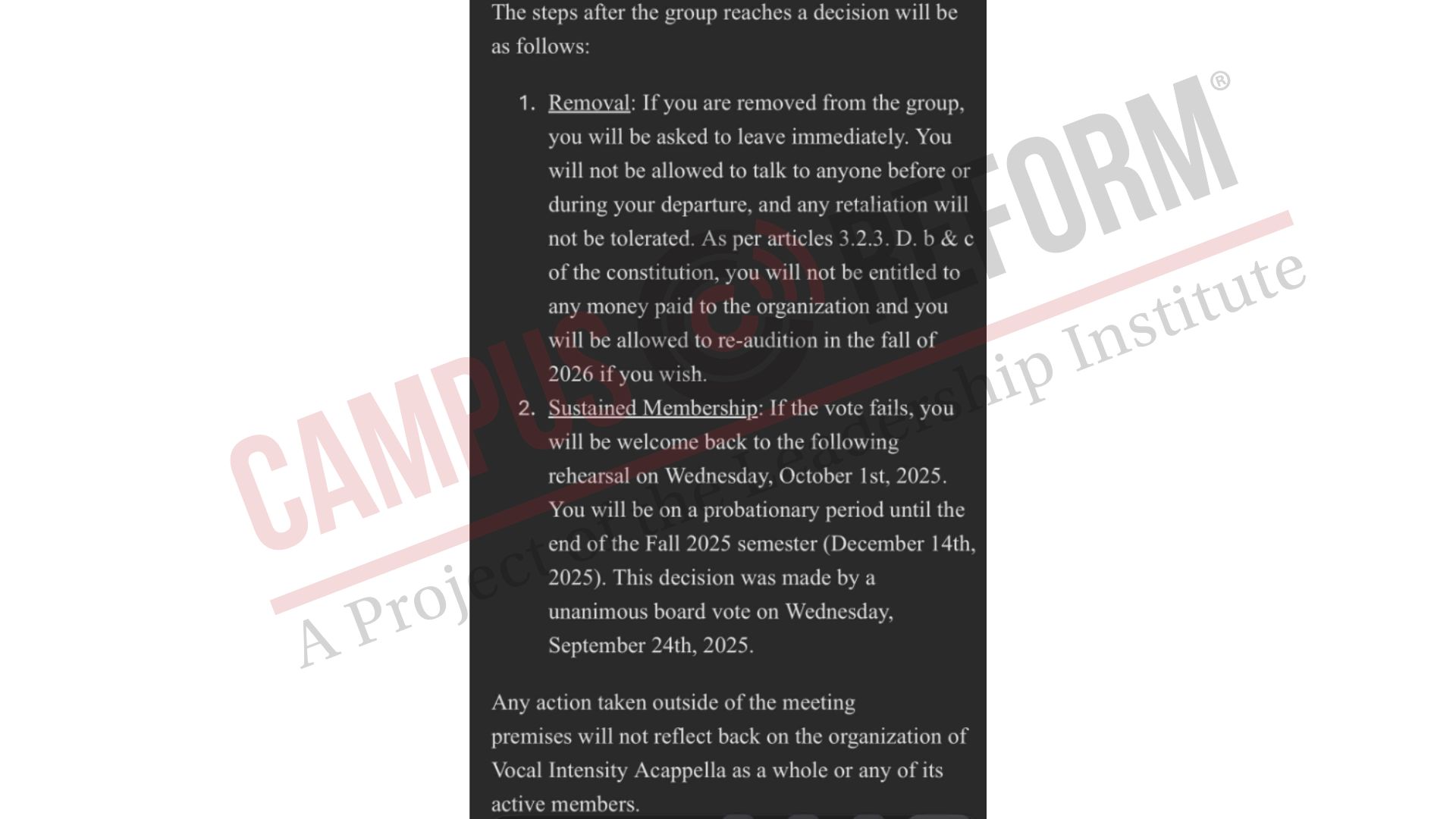
Phillips ultimately resigned, calling the process a “performative ambush designed as a hearing.”
In his resignation letter, Phillips wrote: “I argued for equal treatment. The eagerness to twist my words shows a lack of honesty and critical thought. Denying opportunities based on skin color is discrimination by definition.”
[RELATED: State Department proposes cutting off 38 universities over DEI hiring practices]
He says he was punished, not for misconduct, but for opposing the discriminatory behavior.
“My only crime was advocating for equality for everyone, regardless of skin color. I raised a valid concern, discussed the definition of discrimination and held a mirror up to what they were doing. In their eyes, anti-white discrimination is okay, but challenging that precedent isn’t,” Phillips told Campus Reform.
“What I really want is for people to bring common sense back and stop pretending that people of color are oppressed in this country. I want people to realize that we are meant to celebrate what we have in common instead of dividing and fighting over our differences,” Phillips said.
Campus Reform has contacted Kent State University and the Vocal Intensity A Cappella group for comment. This article will be updated accordingly.
Follow the author of this article on X @emmaarns.