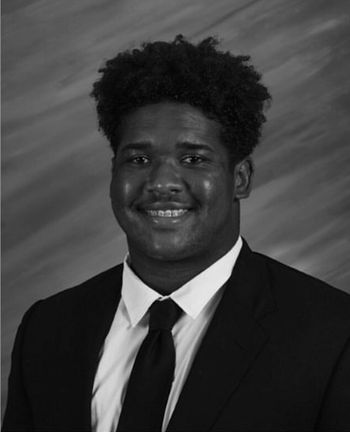
GMU President refuses accountability on DEI after federal demand
George Mason University President Gregory Washington refuses to apologize after the Department of Education found the school’s DEI policies violated federal law.
Washington and his attorney push back against civil rights claims, calling the government’s findings 'absurd,' while critics say DEI programs unlawfully favor some groups over others.
George Mason University (GMU) President Gregory Washington is refusing a federal directive to issue a personal apology for what investigators found were unlawful Diversity, Equity, and Inclusion (DEI) practices.
On Aug. 22, the U.S. Department of Education’s Office for Civil Rights (OCR) concluded that GMU violated Title VI of the Civil Rights Act of 1964 by considering race in faculty hiring and promotion. OCR gave the university 10 days to comply with a proposed resolution that would require Washington to personally apologize, post the statement on GMU’s website, revise policies to remove race-based criteria, implement annual nondiscrimination training, and appoint a compliance coordinator.
[RELATED: George Mason violated civil rights law with DEI-based hiring, Ed Dept says]
Washington rejected that demand in a statement on the university’s website, writing that GMU’s DEI programs “are designed to expand opportunity and build inclusive excellence — not to exclude or advantage any group unlawfully.”
His attorney, former Maryland Attorney General Douglas Gansler, criticized the investigation as “cut short” and the findings as “legally unsound.” In a letter to the GMU Board of Visitors, Gansler described the demand for an apology as “a legal fiction” that “borders on the absurd,” warning that such an admission could expose the university to additional lawsuits.
Washington had already initiated reforms before OCR’s ruling, in anticipation of federal scrutiny.
At an Aug. 1 board meeting, administrators reported the Office of Diversity, Equity, and Inclusion (ODEI) had been dissolved and replaced with the Office for Access and Community Connections (OACC). The university also ended its “Anti-Racism and Inclusive Excellence” (ARIE) program and removed diversity statements from hiring and promotion processes.
The standoff coincides with two ongoing Department of Justice (DOJ) probes into GMU. On July 17, the DOJ launched an employment discrimination inquiry, followed by a July 22 notice opening a broader civil rights investigation into admissions, scholarships, student benefits, and GMU’s handling of anti-Semitism complaints.
Faculty organizations have largely supported Washington. The GMU Faculty Senate passed a resolution defending due process and urging caution in negotiations with federal authorities, though it stopped short of endorsing OCR’s remedies. On Aug. 22, the GMU Board of Visitors said it is reviewing OCR’s proposed steps and the administration’s response.
[RELATED: GMU keeps embattled president, raises his salary to $823,000]
Title VI prohibits discrimination based on race, color, or national origin in institutions that receive federal funds. If GMU refuses to comply, OCR could move to withdraw federal funding, a penalty that would affect both research and student aid.
Campus Reform has reached out to George Mason University, the Department of Education, and GMU’s College Republicans for comment. This article will be updated accordingly.