PROF. JENKINS: The limits of academic freedom
Academic freedom doesn’t provide special dispensation for professors to say whatever they want.
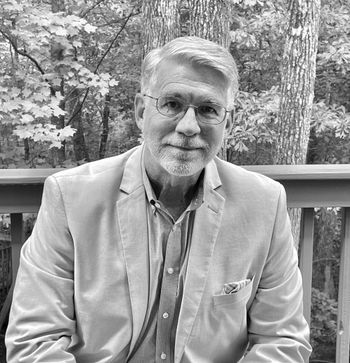
Rob Jenkins is a Higher Education Fellow with Campus Reform and a tenured associate professor of English at Georgia State University - Perimeter College. The opinions expressed here are his own and not those of his employer.
Following the assassination of Charlie Kirk, several professors around the country were fired or suspended for openly celebrating his murder and expressing hatred toward conservatives.
To defend their actions, many invoked the principle of academic freedom. For example, Campus Reform reported that a professor at Fort Hayes State University, Nuchelle Chance, was placed on administrative leave after posting on Facebook, “Me thinks the word ‘karma’ is appropriate.” Chance told Campus Reform she is “deeply troubled by the chilling effect this scrutiny has on academic freedom.”
But is this really a question of academic freedom? In a word, no. Chance might have an argument based on the First Amendment, but academic freedom doesn’t apply in this case.
When faculty members talk about “academic freedom,” they are referring to the American Association of University Professors’ “1940 Statement of Principles on Academic Freedom and Tenure,” which remains the standard used by most institutions today. That Statement reads, in part:
“Teachers are entitled to freedom in the classroom in discussing their subject, but they should be careful not to introduce into their teaching controversial matter which has no relation to their subject.”
In the classroom, then, academic freedom means professors have the right to teach their subject as they see fit, within departmental and university guidelines. It does not mean they are free to teach whatever they want.
For example, I regularly teach a survey course that theoretically encompasses the entire American literary canon from pre-Colonial times to the present. Since there’s no way to cover everything in one 15-week term, my colleagues and I must choose which authors and works we will teach.
[RELATED: Trump extends compact offer to colleges and universities nationwide]
Some dwell more on 18th-century Romanticism, while others focus on Postmodernism. Some concentrate on black literature, while others highlight women writers. Some teach entirely poetry or fiction, while others prefer a good mix.
Each of us is free to structure the course according to our professional judgment, as long as we’re teaching American literature. But we can’t teach Russian literature or African literature. Or political science. Or psychology. Those are outside our purview.
Nor should we be telling our students that Charlie Kirk was a Nazi who got what he deserved. Besides being both false and reprehensible, that statement bears, in the words of the AAUP Statement, “no relation to [our] subject.
There is, admittedly, some gray area, especially in the humanities. When teaching Frederick Douglass’s slave narrative, for instance, a professor might draw parallels to what he or she perceives as modern-day “oppressed peoples.” Many great 19th-century writers, like Hemingway and Steinbeck, had obvious left-wing sympathies. You can’t teach The Grapes of Wrath without talking about Marxism.
But all of that is a far cry from standing up in front of a classroom full of impressionable students and implying (or saying outright) that conservatives are fascists who deserve to die.
[RELATED: PROF. JENKINS: Channeling your anger for good]
What about outside the classroom—say, when posting on social media, like the Fort Hays State professor mentioned above? The AAUP Statement addresses this question as well, noting that “When [faculty members] speak or write as citizens, they should be free from institutional censorship or discipline, but their special position in the community imposes special obligations.”
In other words, to quote the Amazing Spider Man, with great power comes great responsibility. As private citizens, professors are free to say what they want, within limits. Per the Statement, “They should at all times be accurate, should exercise appropriate restraint, [and] should show respect for the opinions of others.”
Whether or not Chances’ comment and dozens more just like it were accurate may be a matter of opinion. But they clearly failed to show anything resembling restraint or respect for others’ opinions—including Charlie’s and those of all the students who agree with him.
So no, such statements are not covered under the umbrella of academic freedom. As I said, some of those professors might have First Amendment arguments, but that is something else entirely—something that applies to all citizens. Chance and her ilk don’t get to carve out for themselves some sort of special dispensation to say literally anything they want just because they’re college professors.
Editorials and op-eds reflect the opinion of the authors and not necessarily that of Campus Reform or the Leadership Institute.