
REPORT: New poll shows Americans’ trust in higher ed rebounding under Trump administration
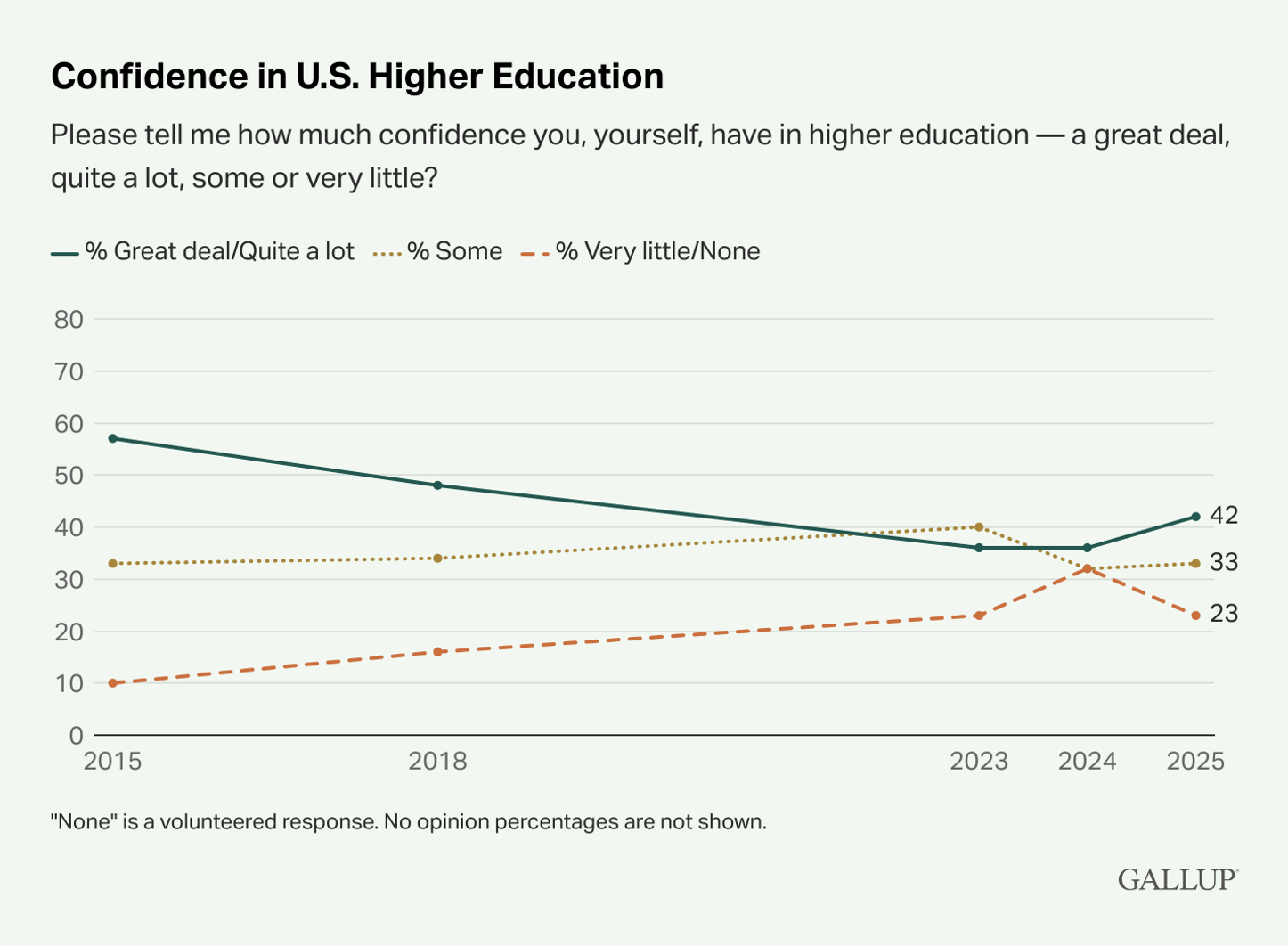
A recent Gallup-Lumina Foundation survey found that 42% of U.S. adults said they have “a great deal” or “quite a lot” of confidence in higher education.
This marks the first recorded increase since Gallup began tracking the trend in 2015, bucking a decade-long decline.
Americans’ confidence in higher education rose for the first time in nearly a decade, according to new Gallup polling.
A recent Gallup-Lumina Foundation survey revealed that 42% of U.S. adults have “a great deal” or “quite a lot” of confidence in higher education, up from 36% in 2023 and 2024.
This marks the first recorded increase since Gallup began tracking the trend in 2015, when confidence stood at 57%, bucking a decade-long decline.
[RELATED: Millions of students dropped out as higher ed shifted focus from degrees to DEI]
Respondents who expressed trust in higher education cited factors such as innovation, quality training, and the overall value of a college education.
Those who lacked confidence in higher education listed “political agendas” as the top reason.
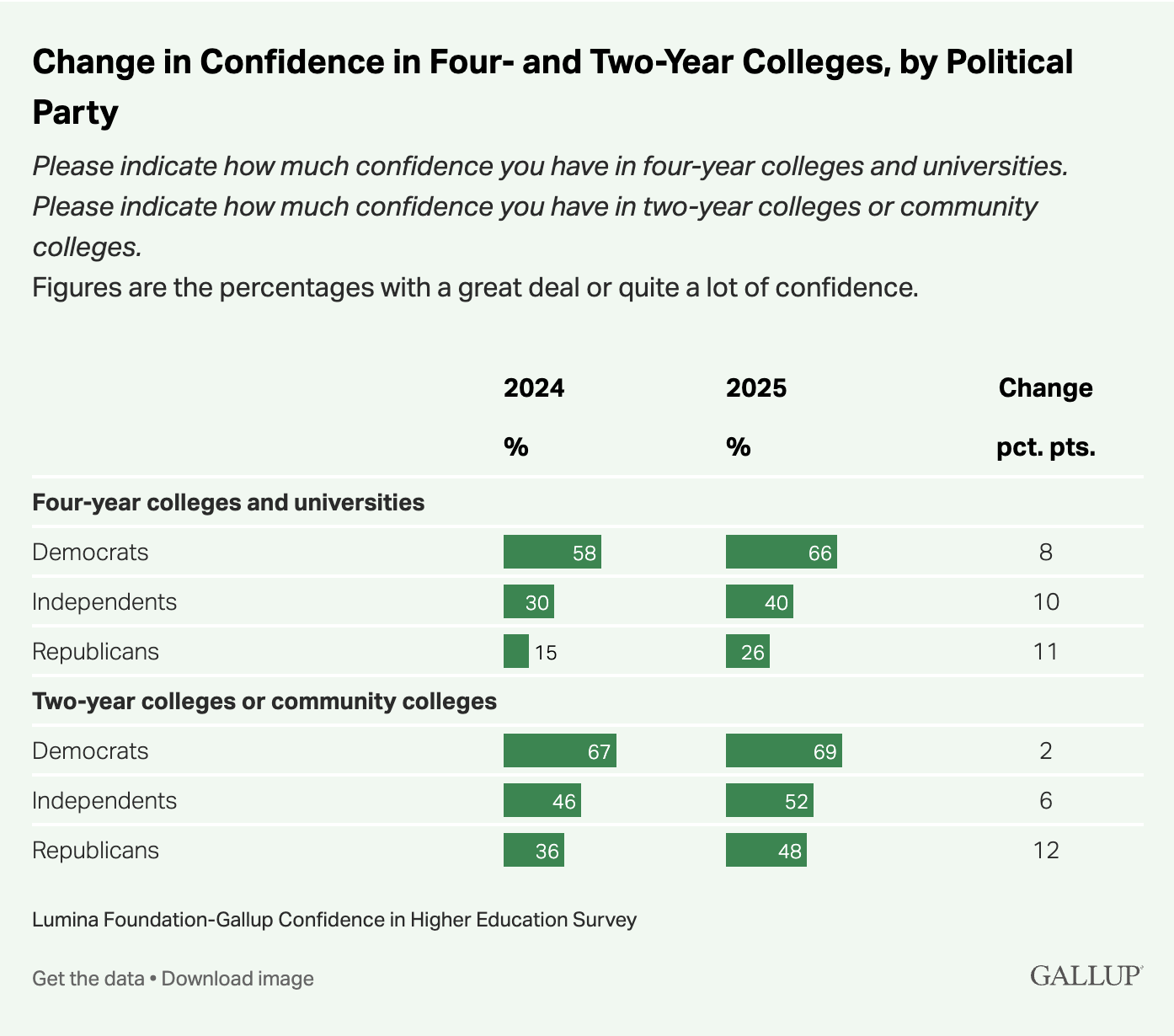
The decline in confidence over the past decade was reportedly largely driven by Republicans, who have long criticized higher education for political bias and ideological indoctrination.
Gallup found that Americans who lacked trust in colleges cited concerns such as institutions being “too liberal,” attempting to “brainwash” students, or discouraging independent thought.
Other concerns included higher education “not teaching relevant skills” or the cost of tuition.
Gallup now reports that Republican confidence in both two- and four-year colleges has increased by more than 10 percentage points, outpacing changes among Democrats and Independents.
The poll results follow a wave of higher education reforms sparked by the Trump administration.
The Trump administration launched investigations into dozens of universities over alleged civil rights violations, including anti-Semitism, race-based discrimination, and sex-based discrimination. At the order of the president, Education Secretary Linda McMahon has pushed to dismantle the Department of Education itself and return authority to states.
[RELATED: Indiana cuts 350+ DEI initiatives from public universities following executive order]
Universities across the country have scaled back diversity, equity, and inclusion (DEI) programs to comply with state and federal law.
In February, the Department of Education issued a “Dear Colleague” letter warning colleges and universities that race-based programs may violate federal civil rights law and place federal funding at risk. The agency called on institutions to eliminate discriminatory practices.
More than 20 states have passed anti-DEI legislation, prompting many public institutions to eliminate race-based programming, scholarships, staff positions, hiring and admissions decisions.
The results are based on a Lumina Foundation-Gallup education survey, conducted by telephone June 2-26 with a sample of 1,402 U.S. adults.
Campus Reform has contacted Gallup for comment. This article will be updated accordingly.
Follow the author of this article on X and Instagram: @RealEmilySturge